
Here is a strategy to teach public speaking to high schoolers. Break down the task into these steps:
  • Students feel comfortable talking about something they are familiar with or enjoy, so first let them choose the topic.
  • Give them a short two to five minute assignment first. Let them make it either humorous or serious.  They should write out what they will say, limited to a specific word range.
  • Have them work in groups of four for feedback on how to state things differently to accurately get across their point. You should quality control the material for appropriateness and clarity.
  • Give Instruction on what body language to use and not use.  Speakers can focus on audience members who give them positive vibes, being careful not to only focus on one person.  
  • Provide ground rules on being good audiences to each other, such as make eye contact with the speaker, smile or nod approvingly to encourage the speaker. 
  • Students can evaluate each other on these criteria, using a simple 1-3 rating system: a) the pace of the talk, b) the number of "uh's and ah's, c) clarity of presentation d) fidgeting or standing too stiffly e) introduction of the subject to capture attention; f) was there an effective summary etc...?  They should understand that "you" are grading also for participation and enthusiasm.  Students can provide the feedback sheets anonymously, if you think this is best for your group.
  • Let volunteers begin the round of speaking to break the ice, and give the more timid a chance to see it done before they attempt it.
  • Repeat assignments like this a time or two to give students practice-- perhaps before they actually get graded on a longer assignment.
All the above instructions can be given using both seriousness and humor. 
 
 
There are parallels between the US Department of Education and the Ministry of Magic in Harry Potter’s Order of the Phoenix. This centralized governing educational bureaucracy is run by corrupt high officials who appear to be disoriented and incompetent, but are conspiring with Lord Voldemort to weaken Hogwart’s School, so the students do not learn what is necessary to defend themselves against his quest for power and dominance.  The Ministry heads are disdainful and patronizing towards teachers, students and muggle’s.  The result is a faltering educational system that compromises the vulnerable and captive students and places them in jeopardy.     

Hogwarts’ educational program is undermined by Senior Undersecretary to the Minister, Dolores Umbridge, whose personage, brightly colored clothing and upbeat tone of voice makes one mistake her as a well-meaning delightful person.  She first is assigned as a teacher to provide instruction on “Defence Against the Dark Arts,” while she proceeds to actually make the children defenseless against them. The Ministry promotes her as Hogwarts' "High Inquisitor" with power to inspect and remove teachers. She ultimately succeeds as Headmaster to control curriculum and the administration of Hogwarts.  The shrewd students, who are determined to learn, go underground and begin teaching themselves what they must know to survive.  

Mirroring this is the US Department of Education whose numerous costly mandates and initiatives also impede children’s ability to learn.  Taking phonics out of reading programs, for example, in favor of “whole word recognition” is like expecting Hogwarts’ students to cast spells before they know how to pronounce them syllabically.  Get a syllable wrong, and you have the wrong spell.  You aim for one outcome but arrive at another. 

While the outcomes are fictitious for Harry Potter and his friends, the sad realities our children struggle through in their classrooms are not.  


Educators want students to do well. Mine did. Each year I taught, more than 90% of my students passed the New York State English Regents exams. I wrote The Three-Dimensional Leader: Negotiating Your Mission, Resources and Context to help people identify the MRC essentials necessary to achieving success in any venture. Teachers and leaders in education must approach their tasks roles, and responsibilities from a three-dimensional perspective. In the classroom the teacher’s challenge is to do these three things
  1. Focus on the mission of adjusting to how Johnny and Jane learn, and respect them and expect them to develop the character and intellectual capacity so they can further educate themselves.
  2. Understand how to connect students to see the value and relevancy of the rich resources within the curriculum.  
  3. Negotiate the contexts of your classrooms so that given this set of students, you are able to get the class team to achieve.  
One-dimensional teachers only are concerned with themselves. They spend too much classroom time talking about themselves, their likes and dislikes and personal preferences. This undermines their ability to objectively teach curriculum.  

Two-dimensional teachers focus narrowly on either the curriculum or the students.  Focussing exclusively on the curriculum leads to presenting it without consciousness of whether or not the students are understanding it. Focussing completely on the students fails to objectively measure their progress in achieving educational standards.      

Three-Dimensional teachers fulfill their mission by asking “how Johnny and Jane learn, and adjusting information delivery styles so curriculum resonates with their varying perspectives and needs. They ensure that the context of their classrooms is supportive of all the class team members. Teaching in 3-D means giving students the foundations they need to make continual progress to step up to the next higher levels of achievement. 

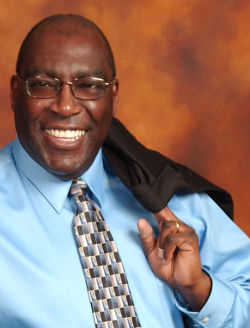
Earl C. Wallace is author of 
The Three-Dimensional Leader: Negotiating Your Mission, Resources and Context.  
His Educational Blog gives you teaching and leadership insights in 300 Words or Less.   
Visit www.ThreeDimensionalLeader.com to leap into a new leadership mindset.
